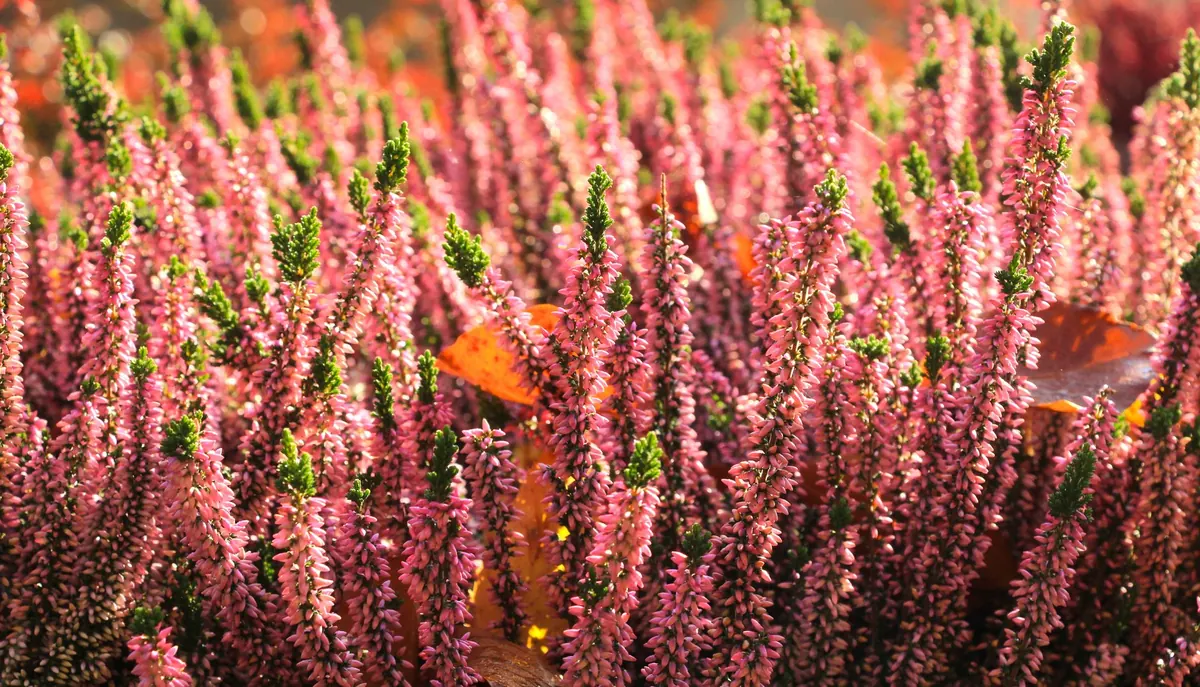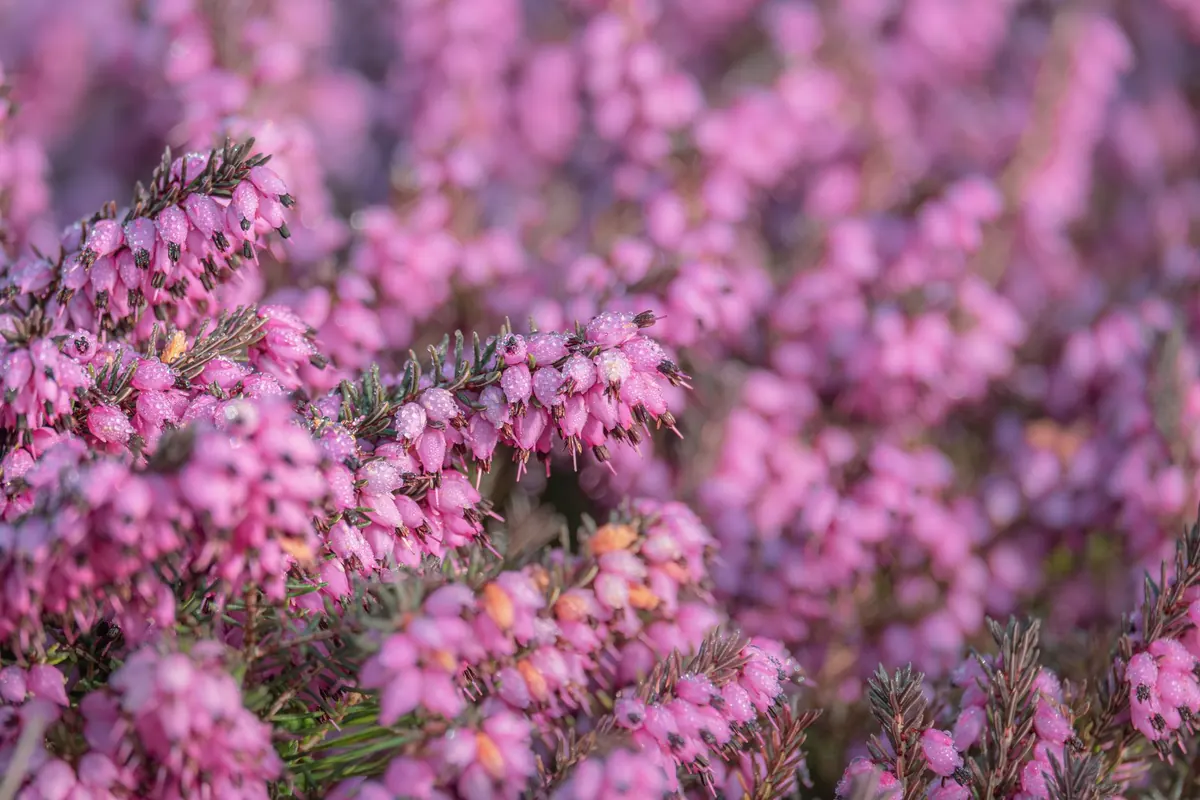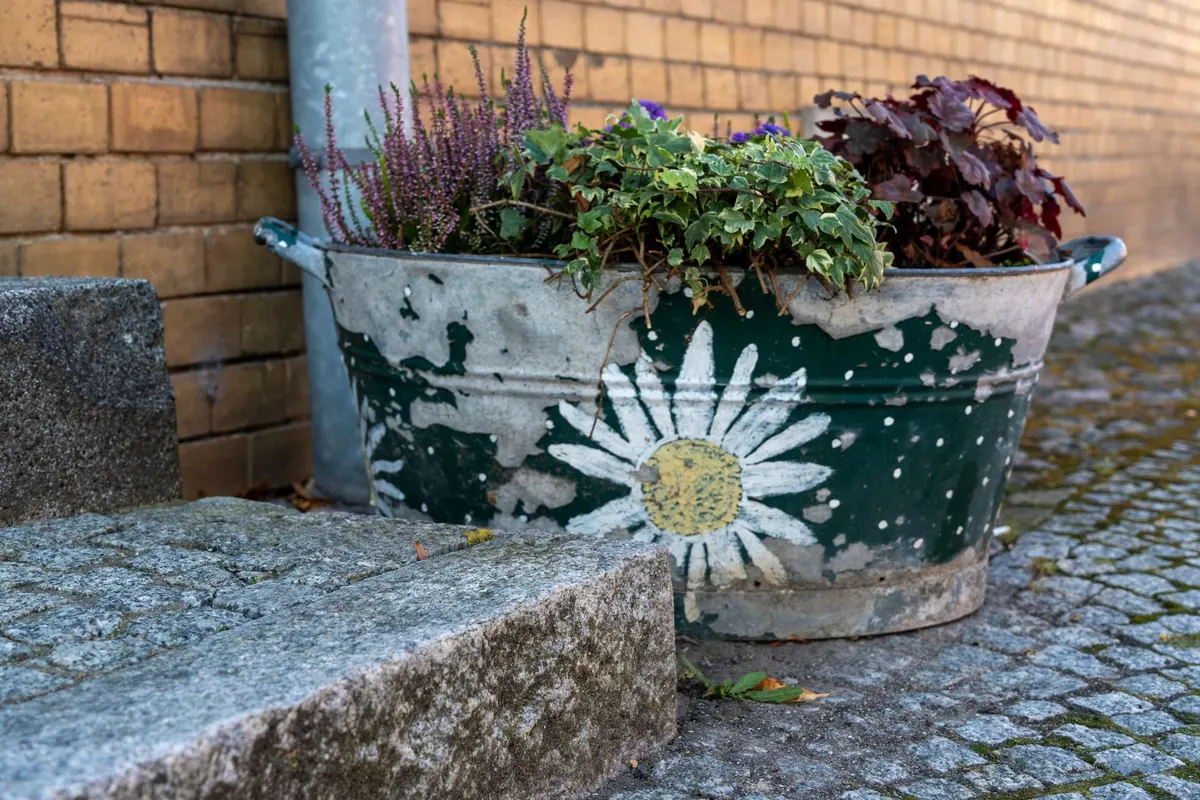
A heather in a pot looks effortless: a tight cushion of colour on a doorstep when everything else has given up. The truth is that the plant is easy, but the root zone is not forgiving. Almost every container heather that fails does so for one of three reasons — wrong compost, wrong water, or roots left in the same tired mix for years. Get those right and a single pot will carry you through all twelve months.
Pick a heather that suits a pot
Most compact heathers take happily to container life; the tall, shrubby species want more root room than a pot can give and usually sulk. Choose by flowering season so your pots are never bare for long:
- Erica carnea and Erica × darleyensis — the winter heathers, in flower from roughly December to April. These are the most forgiving of the group and cope with slightly alkaline soil and hard water better than the rest.
- Calluna vulgaris — the true heather, flowering from late summer into November, often with foliage that shifts colour with the seasons. Strictly acid-loving.
- Erica cinerea — bell heather, neat and low, in flower through summer. Also needs acid conditions.
- Daboecia cantabrica — Irish heath, with a long, loose season into autumn. It appreciates a sheltered corner.
On the label, look for words like dwarf, compact or nana. A heather sold as reaching 60cm will spend its life in a pot looking thin and leggy.
Compost and drainage: the part that decides everything
Use ericaceous compost, not multipurpose. Heathers are lime-haters, wanting something around pH 4.5 to 5.5, and multipurpose compost is usually nearer neutral or alkaline. To keep the mix open and acidic for longer, blend roughly three parts ericaceous compost with one part fine bark, then stir in a handful of horticultural grit or perlite.
Choose a pot at least 30cm across for a single plant, with drainage holes that work. Terracotta dries out faster and looks better; plastic holds moisture longer and suits anyone who forgets to water. Stand pots on feet rather than in a saucer of standing water, and cover the drainage hole with a piece of mesh or a couple of broken crocks to stop compost washing out.
Planting and repotting: a two- to three-year rhythm
Plant in spring or early autumn. Set the rootball so the surface of its compost sits level with the new compost around it. Never bury the crown — the point where stems meet roots — because a buried crown rots quietly through the winter. Firm gently and water in.
Repot every two to three years in early spring, and move up only one size: a pot 2–4cm wider is plenty. Heathers make dense mats of fine roots, so tease out the ones circling the edge, shake off some of the old compost and trim any that have wound tightly round the base. Fresh ericaceous mix, planted at the same depth as before.
If the pot is already as large as you want it, top-dress instead. Scrape off the top 3–4cm of compost each spring and replace it with fresh ericaceous mix and a little bark. That alone refreshes the root zone more than any feed.
Watering: rainwater if you can, never soggy
In hard water areas, tap water is the slow killer. The lime raises the pH of the compost over months, and the plant yellows, thins and dies while the pot looks perfectly normal. Rainwater from a butt is what you want. If tap water is all you have, use it — a dry heather is worse — but top-dress more often and flush the pot through with rainwater whenever you can collect some.
Water when the top 2cm of compost feels dry. On a hot patio in July, a small pot may need water twice a day. In winter, aim for barely moist instead. Heathers resent winter wet far more than cold, so clear saucers, tilt pots slightly so rain runs off, and never water frozen compost — wait for a thaw.
Pruning, feeding and the old-wood rule
Cut back after flowering, and keep the blades in the green. Heathers shoot readily from leafy growth but almost never from old brown stems, so if you shear into bare wood you get a permanent bald patch. Trim the flowered stems to just below the flowers, using shears for an even cushion shape. Winter heathers are tidied in early spring once they finish; summer and autumn flowerers can be trimmed after flowering or left until early spring before growth restarts.
Feed lightly. A diluted ericaceous feed once as growth begins, and again after flowering if the plant looks pale, is usually enough. Overfeeding produces soft, leggy growth that splits open in the middle. If you mixed slow-release ericaceous fertiliser into the compost at repotting, skip the liquid feed for that year.
One pest is worth watching. Vine weevil grubs live in containers and eat roots, and a plant that wilts despite damp compost may be hollowed out beneath the surface. Tip it out and look. Grey mould, meanwhile, signals wet, airless conditions — thin the centre, improve drainage, move the pot somewhere breezier.
The year-round care checklist
- Spring (March to May): repot if due, top-dress if not. Trim winter heathers once flowering ends. Begin watering as growth starts and give one light ericaceous feed.
- Summer (June to August): check pots daily in hot spells. Mulch the surface with bark to keep roots cool. Watch for vine weevil damage and deadhead Daboecia to keep it flowering.
- Autumn (September to November): the main show for Calluna. Stop feeding. Let flowers fade before trimming, and move pots to a sheltered spot before hard frost arrives.
- Winter (December to February): winter heathers come into their own. Raise pots on feet, wrap them in hessian or bubble wrap in a cold snap, group them together for shelter, and water sparingly on mild days only.
A pot that earns its place
The whole routine comes down to three things: fresh acid compost, rainwater, and secateurs used at the right moment. Do those and a 30cm pot will look after itself for years, filling out slowly and flowering in the grey months when little else will. When a container heather starts to struggle, don't reach for the feed. Check the drainage, check the compost, and check that the crown hasn't sunk below the surface. It is nearly always one of those three.
Photo: Gundula Vogel / Pexels