Heather is forgiving, but it keeps a calendar. Trim a summer-flowering heath in the wrong month and you lose the flower show for a whole year. Skip the spring mulch two seasons running and a dense carpet quietly turns into bare stems and weeds. The good news is that the work is small and seasonal: a few afternoons a year, spread across four tidy windows. What follows is a practical rhythm for feeding, pruning, mulching and protecting heather, whether you grow it in a border, on a bank, or in pots on a windy balcony.
Start With What You Grow
Timing depends on when your heather flowers, not on the colour of the pot it came in. Most garden heathers fall into a few groups, and each has its own pruning window:
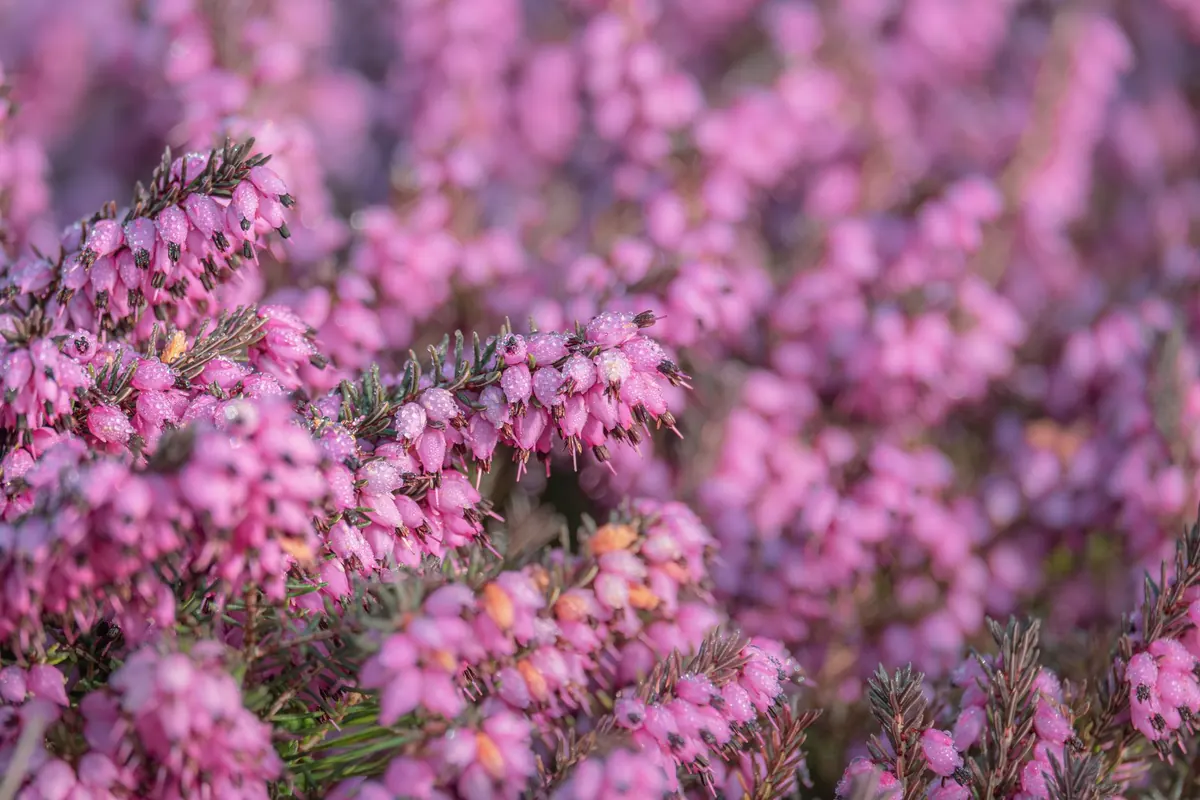
- Winter to early spring: Erica carnea and Erica x darleyensis. Colour from December to April, cut back right after flowering.
- Summer: Erica cinerea (bell heather) and Daboecia cantabrica. Trim after the main flush, usually late summer.
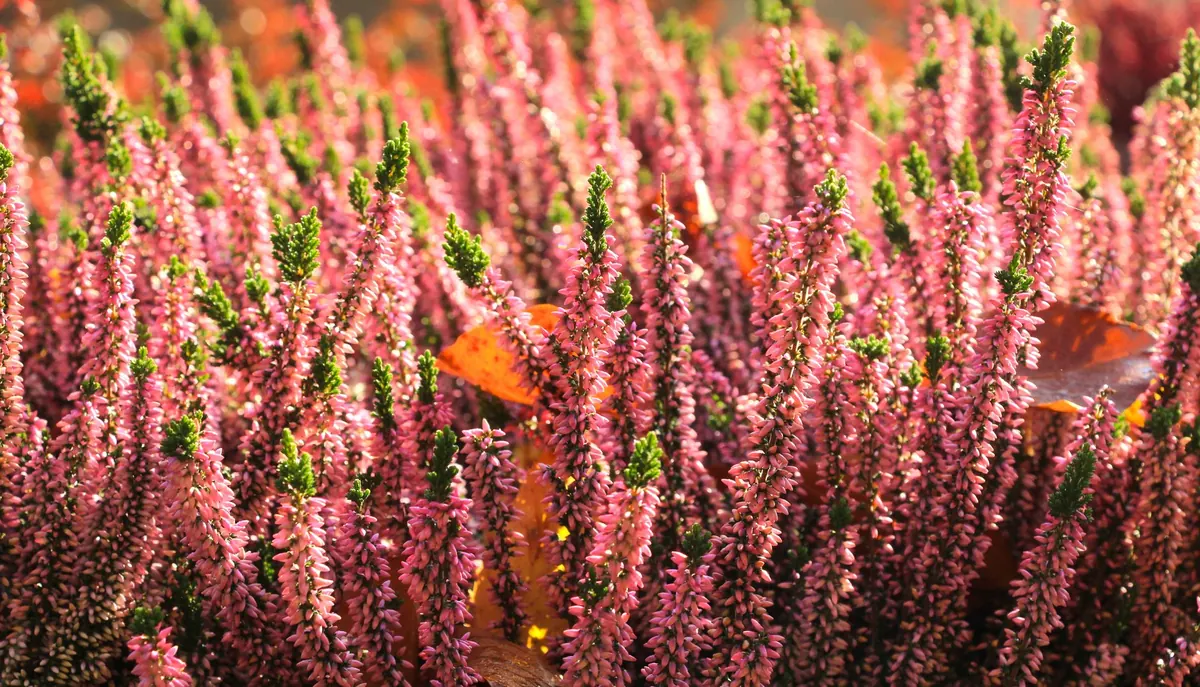
- Late summer to autumn: Calluna vulgaris, the classic Scottish heather. Spring or post-flowering trimming, depending on your climate.
- Tree heaths: Erica arborea and its relatives. Shrubby, taller, and slower to recover from a hard cut.
One rule applies to all of them: heathers do not regrow from old, bare wood. Always finish your cut where there is green growth below the blades. Cut into the brown and you will leave a permanent stump.
Spring: Prune, Feed Lightly, Mulch Well
Prune before the new growth takes off
From late March into April, once the worst frosts have passed, cut winter-flowering heaths as the flowers fade. Take off the spent spikes plus the top of last year's growth, roughly a third of the plant. Leave it until June and the job becomes awkward, because the fresh green tips have grown away from the dead flowers.
Calluna can be trimmed now as well, particularly in cold gardens where an autumn cut would leave soft growth exposed to winter. Shear the top third into a gentle dome, so light still reaches the base of the plant. If your plants have been in for years and have gone leggy, cut a little harder but never below the green.
Feed sparingly, mulch generously
Heathers are not hungry plants. A light dressing of ericaceous fertiliser in early spring is plenty, and a second feed in midsummer is only worth it on poor sandy ground or in containers. Strong feeding pushes floppy growth that flowers poorly and suffers in wind.
Mulching matters more. Spread 4–6 cm of pine bark fines, composted bark or leaf mould around the plants, keeping it clear of the crowns. Avoid mushroom compost, spent lime and anything chalky, since heathers need acid, free-draining soil. This one habit suppresses weeds, keeps roots cool and moist, and slowly feeds the soil at the same time.
Summer: Water Deeply, Weed Early, Deadhead
Established heather in open ground is surprisingly drought-tolerant, but the first two years are the making or breaking of it. In a dry spell, water thoroughly once a week rather than giving a daily sprinkle. Soak until the soil is wet a spade's depth down, then let it dry slightly before watering again. Roots follow moisture downward, which makes tougher plants.
Containers are a different job. In hot weather, check pots daily and water until it runs out of the drainage holes; small pots on a sunny patio may need it twice a day. A light shower that only wets the surface does more harm than good.
Weed by hand while the weeds are small. Heather roots are shallow and fine, so a hoe dragged through the bed will do more damage than the chickweed ever would. Deadhead Daboecia and any repeat-flowering types as the first flush fades to encourage a second round.
Leave summer-flowering Erica cinerea alone for now. Hold your nerve and wait until it has finished. If you notice bleached, brownish patches spreading through a plant in late summer, heather beetle larvae are often the cause; trim out the worst of the damaged growth and clear the debris beneath it to reduce the population next season.
Early Fall: The Best Planting Window
September and October are the ideal months to put in new heather. The soil is still warm, rain returns, and plants root well before winter. If you only do one job this season, make it this one.
- Choose a sunny spot with acid, free-draining soil. Heather sulks in shade and sits miserably in winter wet.
- Dig a hole slightly wider than the root ball. Plant at the same depth the heather sat in its pot.
- Tease out the outer roots, firm gently, and water in well even if rain is forecast.
- Mulch around, not over, the crown, and water weekly through any dry spells in the first year.
- Space plants according to their spread, or a little closer if you want a quick, knitted carpet.
This is also the moment to trim Erica cinerea and other summer-flowering heaths, once the flowers have gone over. A light cut now gives new growth time to harden before the cold.
Winter: Protect, Do Not Feed
Stop feeding in autumn. Nitrogen in late season produces soft growth that frost shreds. Instead, turn your attention to drainage and shelter.
Standing water kills more heather than cold ever does. Check that beds drain freely, and raise containers onto feet so they never sit in a puddle. Move pots against a sheltered wall if your site is exposed. On open ground, a loose layer of bark mulch insulates the roots without smothering the plants.
After heavy snow, brush it off with a soft broom before it turns to ice and snaps branches. Avoid walking on frozen beds around your heather, since footprints can crack the surface roots. Winter-flowering Erica carnea will carry you through the darkest weeks; leave its trimming for spring, when the bees have finished with it.
The Year at a Glance
- Spring: trim winter-flowering heaths, feed lightly, mulch, replace any losses.
- Early summer: water deeply in dry spells, weed by hand, deadhead repeat-flowering types.
- Late summer to early fall: cut summer-flowering heaths, plant new heather, mulch again if needed.
- Winter: no feeding, check drainage, shelter pots, knock snow off branches.
Two Habits Worth Keeping
If you remember nothing else, remember these. Never cut into old, bare wood, and mulch every spring with an acid, bark-based material. Those two habits keep heather dense, flowering and weed-free with almost no other input.
Beyond that, watch your own garden rather than the calendar. A sheltered coastal plot runs a fortnight ahead of a cold inland one, and a pot dries out far faster than a border. Use the seasons as a guide, adjust to what your plants are actually doing, and heather will repay you for decades.
Photo: Gosia K / Pexels